

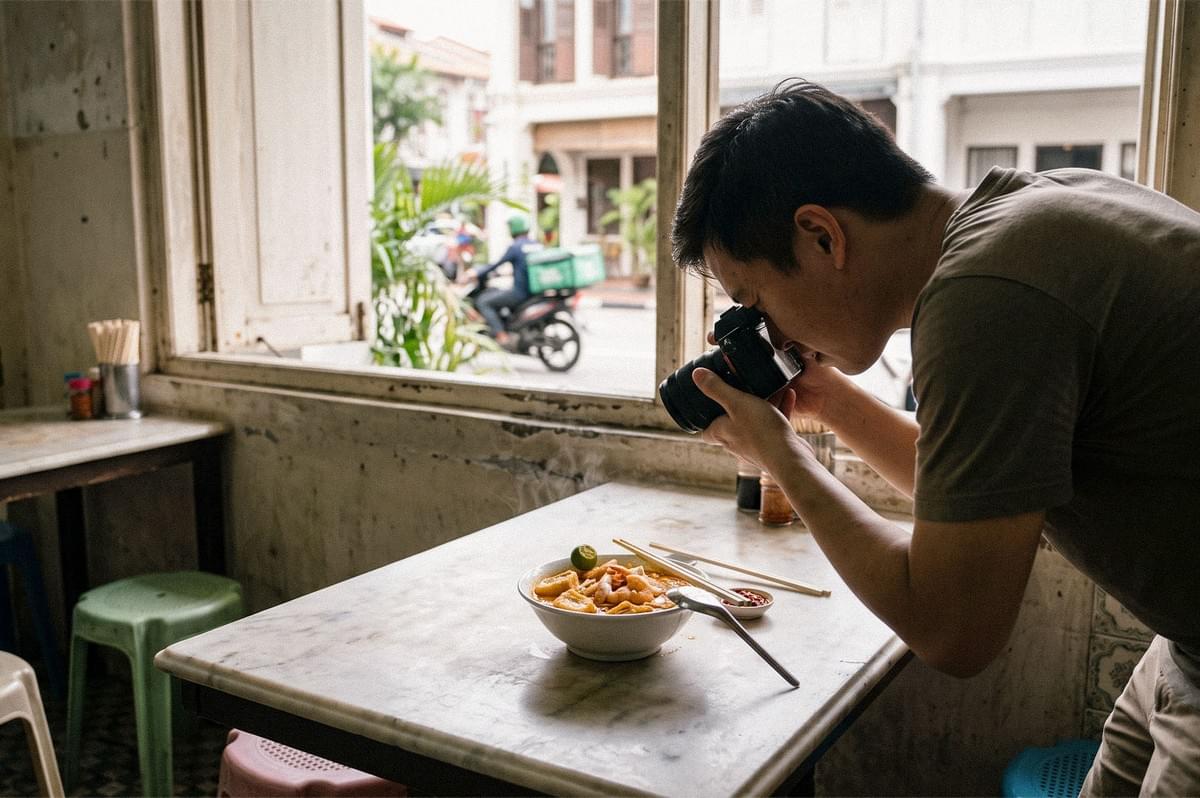
The first thing I noticed was the shadow beneath the spoon.
It was barely wrong. Too soft at the handle, too dense beneath the bowl, as if the light were arriving from two slightly different directions. On its own, I might have ignored it. But after spending months working with AI-generated food images, I had become unusually sensitive to that kind of inconsistency.
I was shooting a bowl of laksa that afternoon, close to a window while the late Singapore light flattened against the glass. Steam lifted, disappeared, returned. The broth shifted each time I nudged the bowl. A lime wedge leaned against the rim. I moved it three millimetres. Then moved it back.
Outside, delivery riders passed. A bus sighed at the kerb. Somewhere below, metal shutters rattled open.
AI had not made me faster.
It had made me suspicious.
When you work closely with generative images, you begin to notice where visual logic breaks. A highlight appears on the wrong side of a prawn. A ceramic bowl reflects a light source that does not exist. Coriander leaves stay unnaturally crisp beside visibly hot broth. Depth of field isolates one garnish while another object on the same focal plane dissolves into blur.
These errors are small, but they are instructive.
Once I started seeing them in AI images, I began looking for the same inconsistencies through my camera.
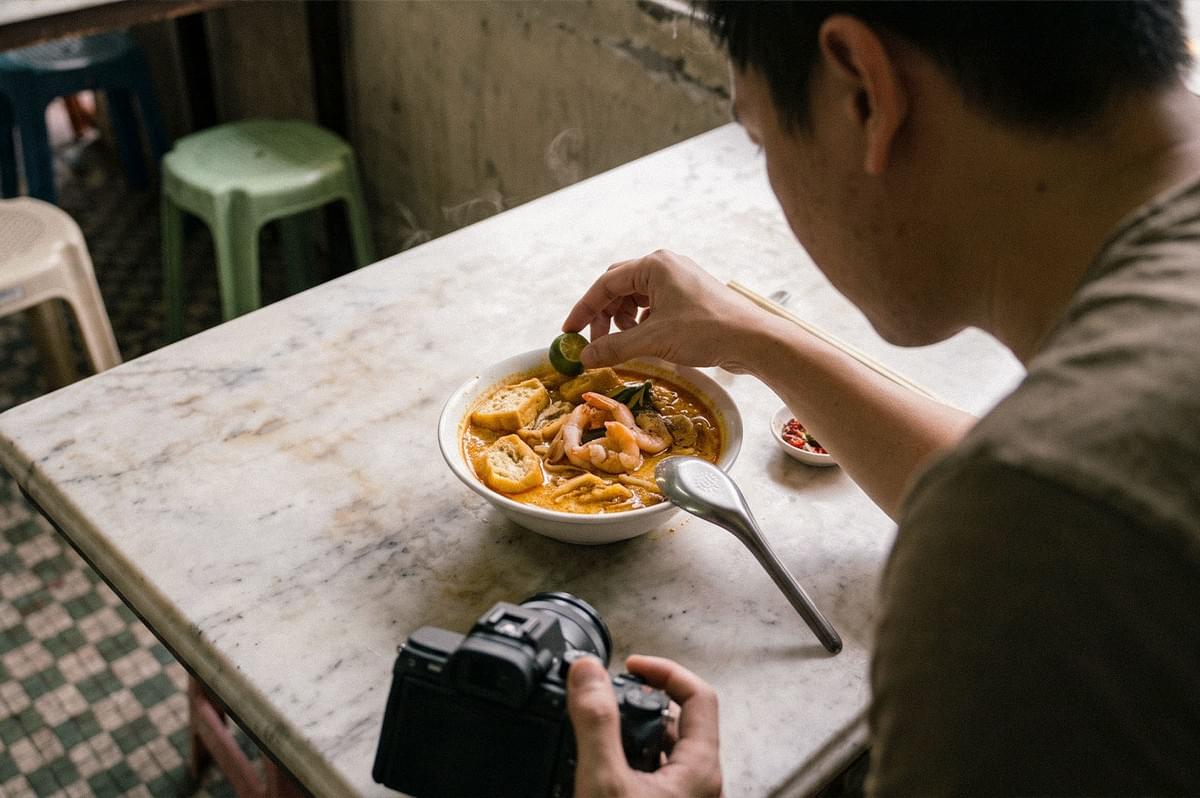
I paid closer attention to whether the window light actually reached the back edge of the plate. I checked whether the shadow from a chopstick matched the shadow beneath the bowl. I stopped assuming that texture would take care of itself and began watching how oil caught the light, how condensation formed, how quickly fried surfaces lost their crispness.
The camera became less about capturing what was in front of me and more about verifying it.
There is something fitting about learning this in Singapore, where visual layers rarely exist in isolation. Old tiles sit beneath new signage. Hawker stalls glow under LED menus. Stainless steel, plastic stools, patterned bowls and decades-old recipes coexist without needing to resolve into one aesthetic.
Good food photography works similarly.
The image does not need to be perfect. It needs to be internally consistent.
Now, before I press the shutter, I look longer. I study the direction of light. I notice where steam crosses a dark background. I check the distance between objects instead of fixing composition later.
AI was supposed to make image-making easier.
Instead, it taught me to notice when something does not quite belong.
And that has made me more deliberate behind the camera.
