• Home
  • About Us
  • Al Photography 
    • Food Styling with AI
    • AI Editing Tips
    • Lighting & Composition
    • AI-Generated Photos
    • Social Media & Marketing
  • Framing the Future
  • Blog
  • …  
    • Home
    • About Us
    • Al Photography 
      • Food Styling with AI
      • AI Editing Tips
      • Lighting & Composition
      • AI-Generated Photos
      • Social Media & Marketing
    • Framing the Future
    • Blog
  • Home
  • About Us
  • Al Photography 
    • Food Styling with AI
    • AI Editing Tips
    • Lighting & Composition
    • AI-Generated Photos
    • Social Media & Marketing
  • Framing the Future
  • Blog
  • …  
    • Home
    • About Us
    • Al Photography 
      • Food Styling with AI
      • AI Editing Tips
      • Lighting & Composition
      • AI-Generated Photos
      • Social Media & Marketing
    • Framing the Future
    • Blog

The Joy of Trying a Food Image That Might Not Work

· Framing the Future,Visionary Perspectives,Food Styling,AI Editing,Daniel Hart
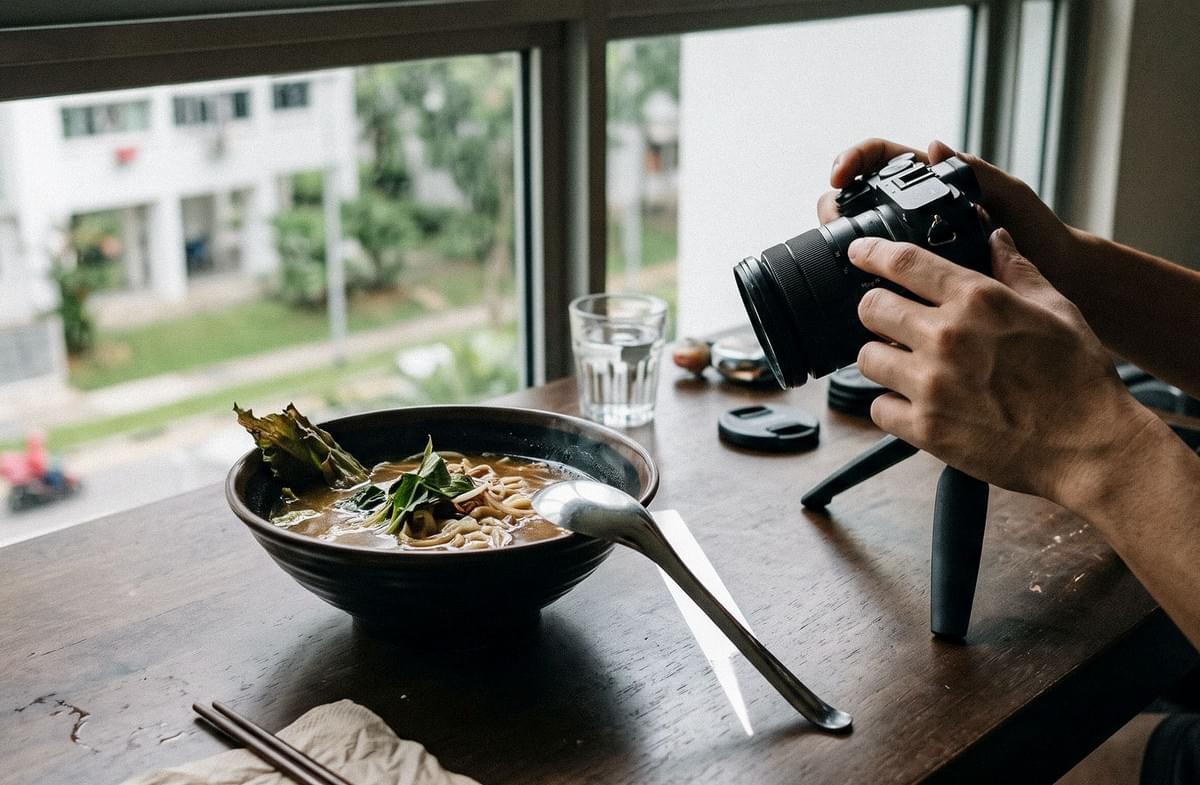
A person uses a digital camera on a tripod to photograph a bowl of freshly prepared noodle soup on a wooden table beside a large window.

The reflection on the spoon was almost too bright.

It cut across the metal in a hard white line, while the rest of the scene sat in low, soft light. A bowl of noodles was pushed slightly too far to the edge of the frame. The garnish leaned away from the camera. Nothing about the setup felt especially safe.

That was why I kept it.

I was shooting near a window in Singapore just after lunch, when the light had started to flatten against the glass. Outside, traffic moved in short bursts. A delivery rider stopped beneath the block. Someone dragged a chair across tile. Inside, the broth cooled slowly while I adjusted the camera by a few degrees and watched the composition become stranger.

Usually, I would correct it.

This time, I wanted to see what happened if I did not.

The Value of an Uncertain Frame
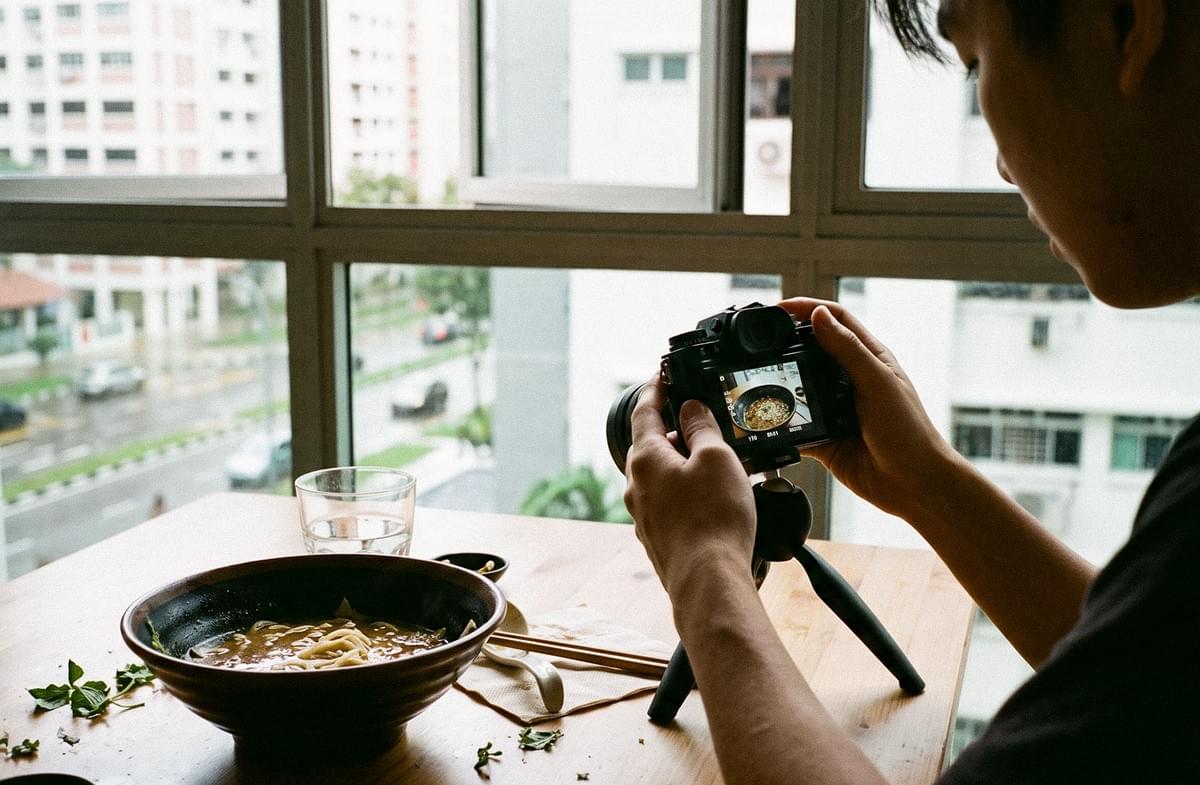
A person adjusts a digital camera on a tripod to capture a close-up photograph of a bowl of noodle soup, with the dish displayed on the camera screen.

Food photography often rewards control. You watch exposure, depth of field, highlight placement, shadow density. You make small corrections until the image behaves.

AI tools can intensify that instinct. They make it easy to imagine alternatives: cleaner backgrounds, softer shadows, more balanced plating, a more convincing falloff of light. When refinement is always available, it becomes tempting to treat uncertainty as a flaw.

But some of my more useful images begin with a decision I am not sure about.

A shallow crop. A darker plate than I would normally choose. Steam drifting across the focal point. A highlight that borders on distracting.

These choices do not always survive.

That is part of their value.

What Failure Leaves Behind
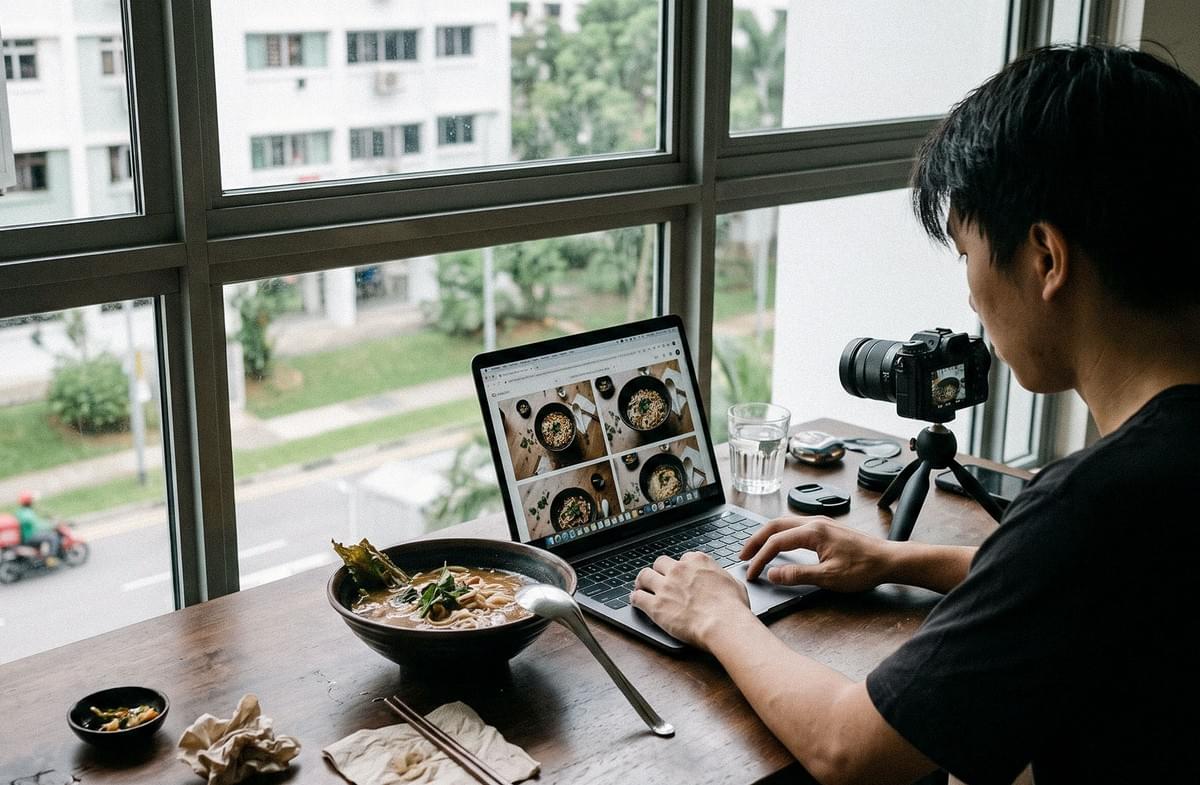
A person reviews food photographs on a laptop while a camera on a tripod and a bowl of noodle soup sit on the table beside a large window.

The image I made that afternoon was not one I would call resolved. The spoon remained too bright. The noodles felt slightly compressed at the edge of the frame.

But the frame had tension.

It felt less arranged.

And when I later used AI to test small variations, I noticed something important: the strongest versions did not erase the awkwardness. They preserved just enough of it.

That is the part I keep returning to.

Experimentation is not the opposite of precision. It is often how precision becomes more interesting.

Sometimes a food image needs to risk looking wrong before it can show you a different way to look.

Previous
The Food Photograph Before the First Bite
 Return to site
strikingly iconPowered by Strikingly
Cookie Use
We use cookies to improve browsing experience, security, and data collection. By accepting, you agree to the use of cookies for advertising and analytics. You can change your cookie settings at any time. Learn More
Accept all
Settings
Decline All
Cookie Settings
These cookies enable core functionality such as security, network management, and accessibility. These cookies can’t be switched off.
These cookies help us better understand how visitors interact with our website and help us discover errors.
These cookies allow the website to remember choices you've made to provide enhanced functionality and personalization.
Save