

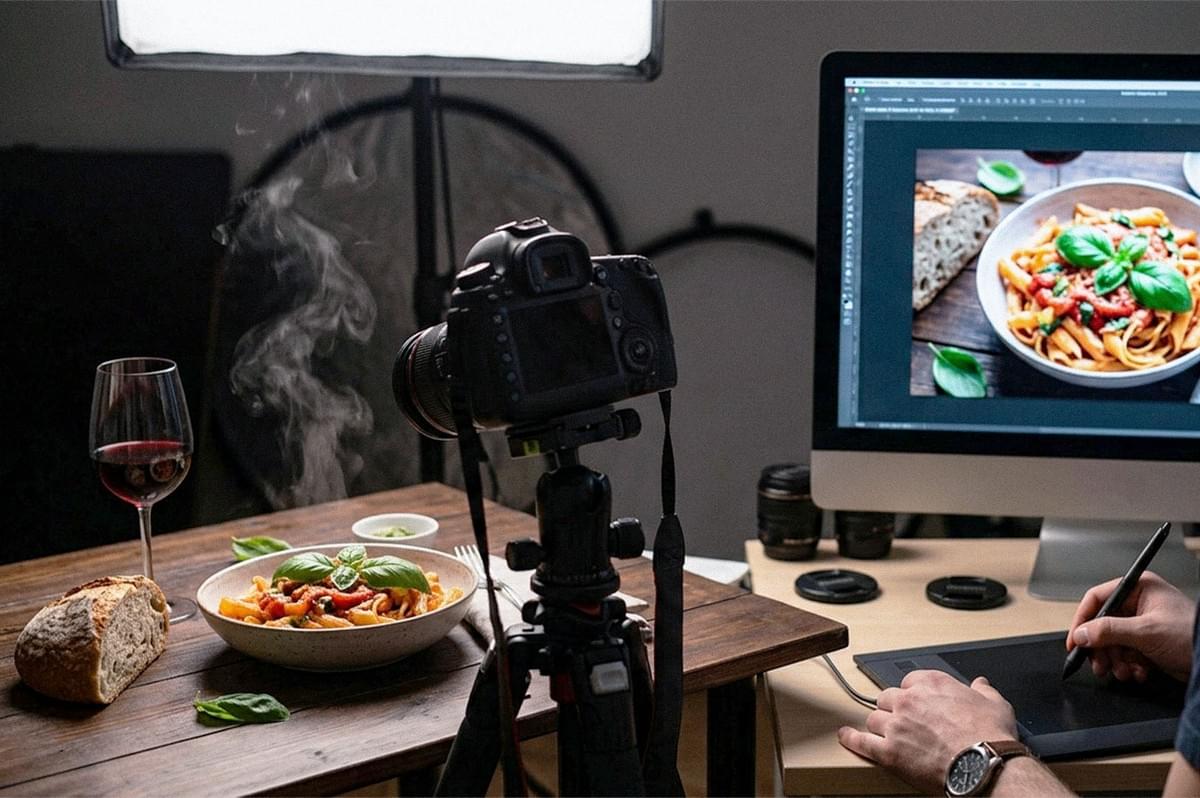
Photo editing is moving away from manual correction and toward visual decision-making.
For years, editing meant adjusting exposure, removing distractions, correcting color, sharpening texture, and retouching individual details. AI is reducing the time required for many of those tasks.
The editor’s role is changing with it.
The future of editing will be less about performing every correction by hand and more about deciding what the image should become. That is the shift AI Food Photo Hub keeps coming back to.
The Shift From Tools to Instructions
Traditional retouching is task-based.
An editor identifies a problem, selects a tool, and fixes it manually.
AI-assisted editing changes that sequence. Instead of making every adjustment directly, the editor increasingly defines the intended result.
That may include instructions such as:
- Match the lighting across this image set
- Reduce background distraction
- Preserve natural food texture
- Extend the table surface
- Keep the dish unchanged
- Create a wider crop for a website banner
The technical execution becomes faster. The visual judgment becomes more important.
Direction Requires Clear Standards
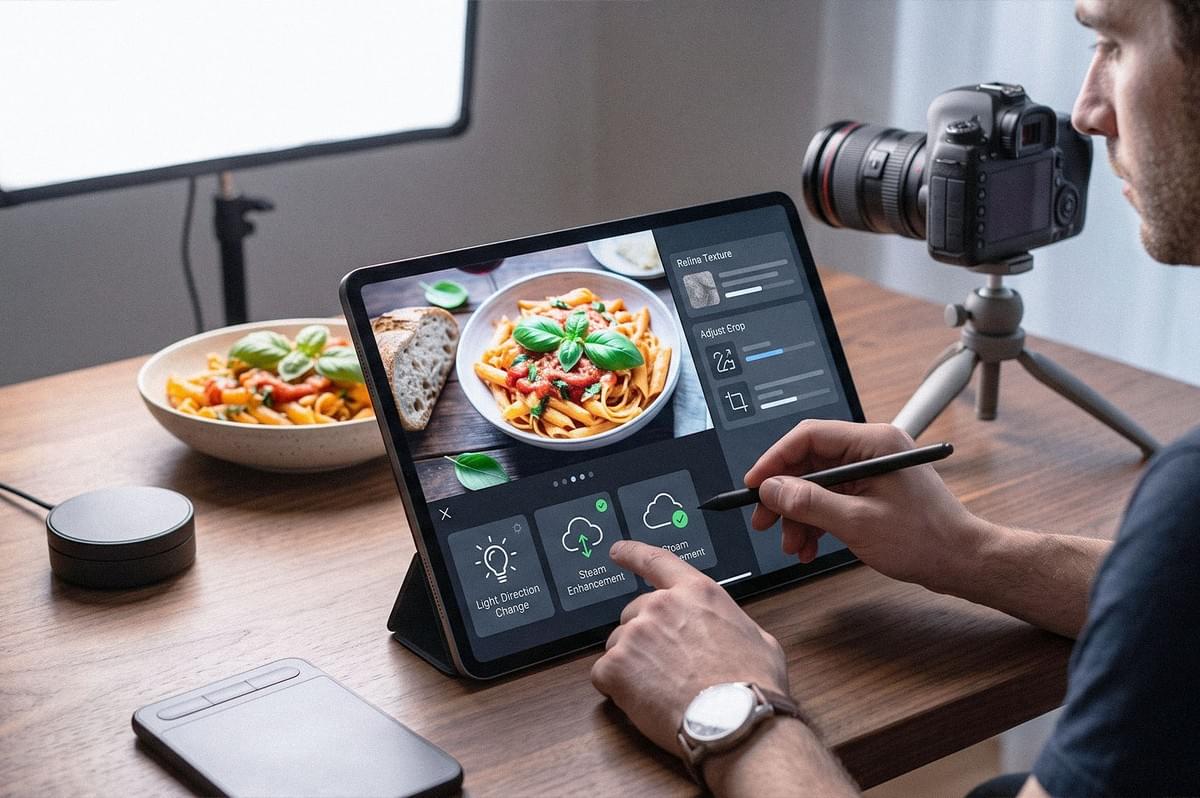
This shift does not make editing easier in every sense.
If AI can produce multiple versions quickly, someone still has to determine which version is correct.
That requires clear standards for:
- Color accuracy
- Texture realism
- Shadow behavior
- Brand consistency
- Composition
- Product accuracy
Without those standards, faster editing simply produces more inconsistent options. A restaurant brand should not change with every prompt — and neither should a food image set.
The editor becomes responsible for controlling variation rather than creating every change manually.
Retouching Will Not Disappear
Manual intervention will still matter.
Food imagery contains details that automated systems can misread. Reflections, transparent surfaces, steam, sauces, garnishes, and irregular textures often require close inspection.
The difference is that manual retouching will become more selective.
Editors may spend less time correcting routine exposure or background issues and more time resolving the areas where visual credibility depends on precise human judgment.
The New Editing Skill
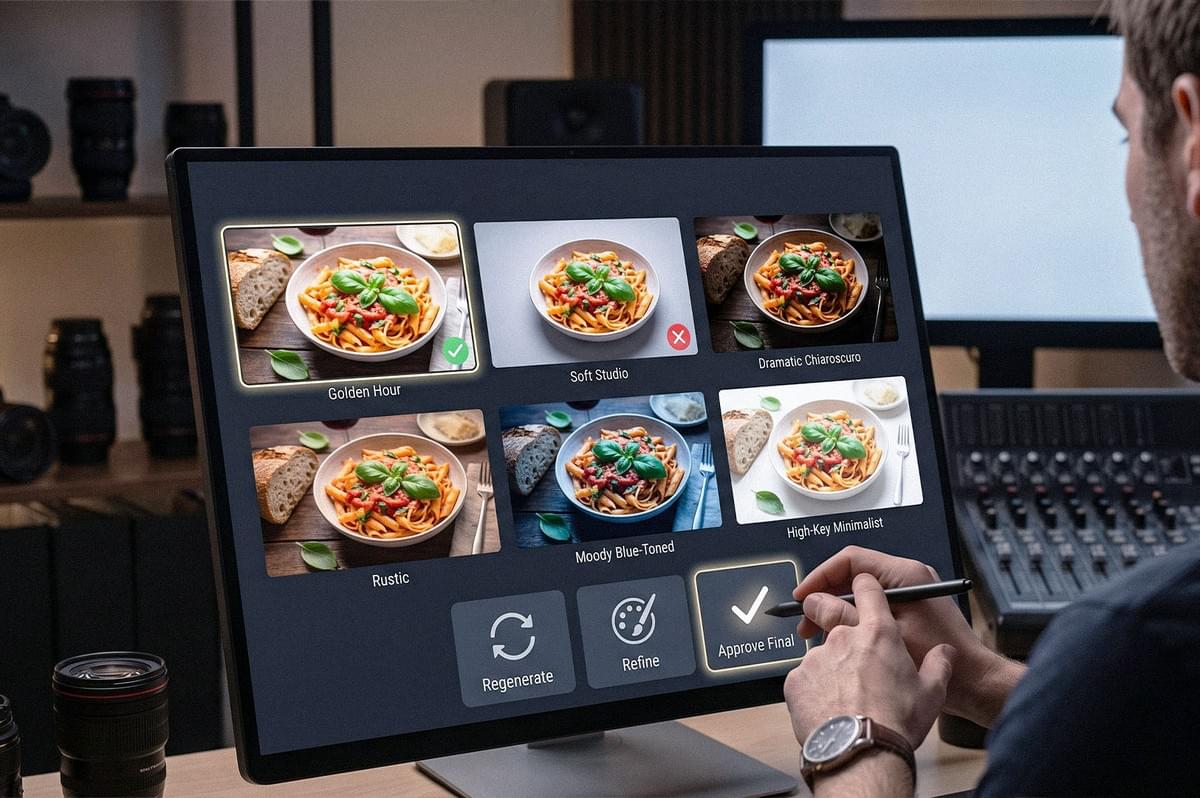
The most valuable skill will be the ability to describe, evaluate, and refine an intended visual outcome.
That is closer to directing than retouching.
The editor sets the standard. AI performs more of the execution. The editor reviews the result, rejects weak variations, and decides when the image is finished.
The software may become more automated.
The responsibility for the final image will not.
