

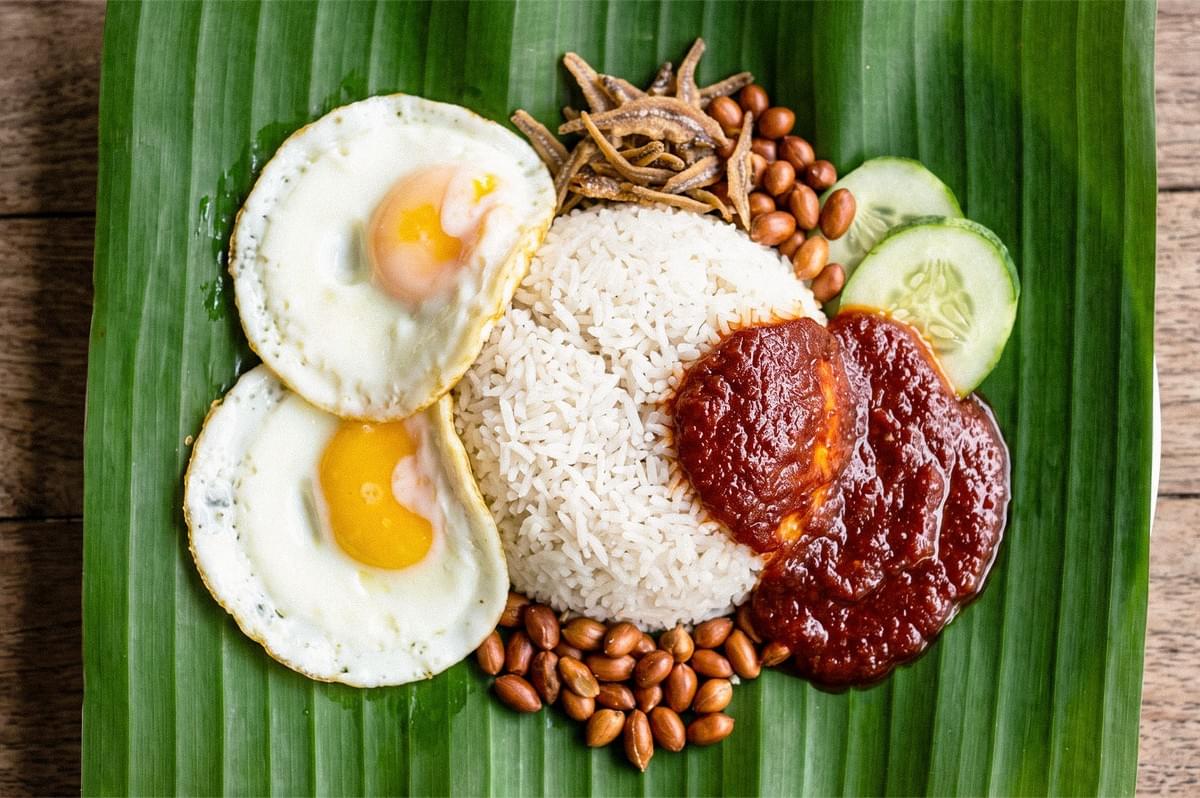
The first time AI cost me a client's trust, it was over a plate of nasi lemak.
Not because the image looked bad. It looked wonderful. Too wonderful, actually. I'd used AI to plump up the sambal, add a second fried egg, and make the ikan bilis glisten like it had just come off the wok. The café owner loved it. Then a customer walked in, ordered the dish, and quietly asked why it didn't look like the photo.
That kind of question will hit you hard.
But I've known since: AI-generated food photography is genuinely useful. But creating AI images for restaurant content can also quietly get you into trouble here in Singapore if you treat it as a shortcut to making food look like something it isn't.
The line between the two is thinner than most people think.
What the Rules Actually Say Here
Let's clear up the legal part first, because people assume there's a strict rulebook when there mostly isn't.
Using AI to create or edit food images is not banned in Singapore. The Advertising Standards Authority of Singapore has said AI-generated advertising content isn't objectionable on its own. What matters is whether the finished image misleads people. False advertising is unacceptable whether you made it with AI, a camera, or a paintbrush.
The Consumer Protection (Fair Trading) Act backs this up. It protects consumers against misleading or false claims, and that includes claims made with AI-generated images. So the tool you used is not the point. The truthfulness of what you showed is.
As of late 2025, Singapore said there were no plans to require a specific "AI-generated" label on images of products or services. That surprises people. But it doesn't let anyone off the hook, because the existing rules about honesty still apply.
AI Food Hub Tip: Don't treat "AI-generated" as a magic disclaimer. Slapping that label on a misleading image doesn't make it honest. If the photo promises more than the plate delivers, the label won't save you.
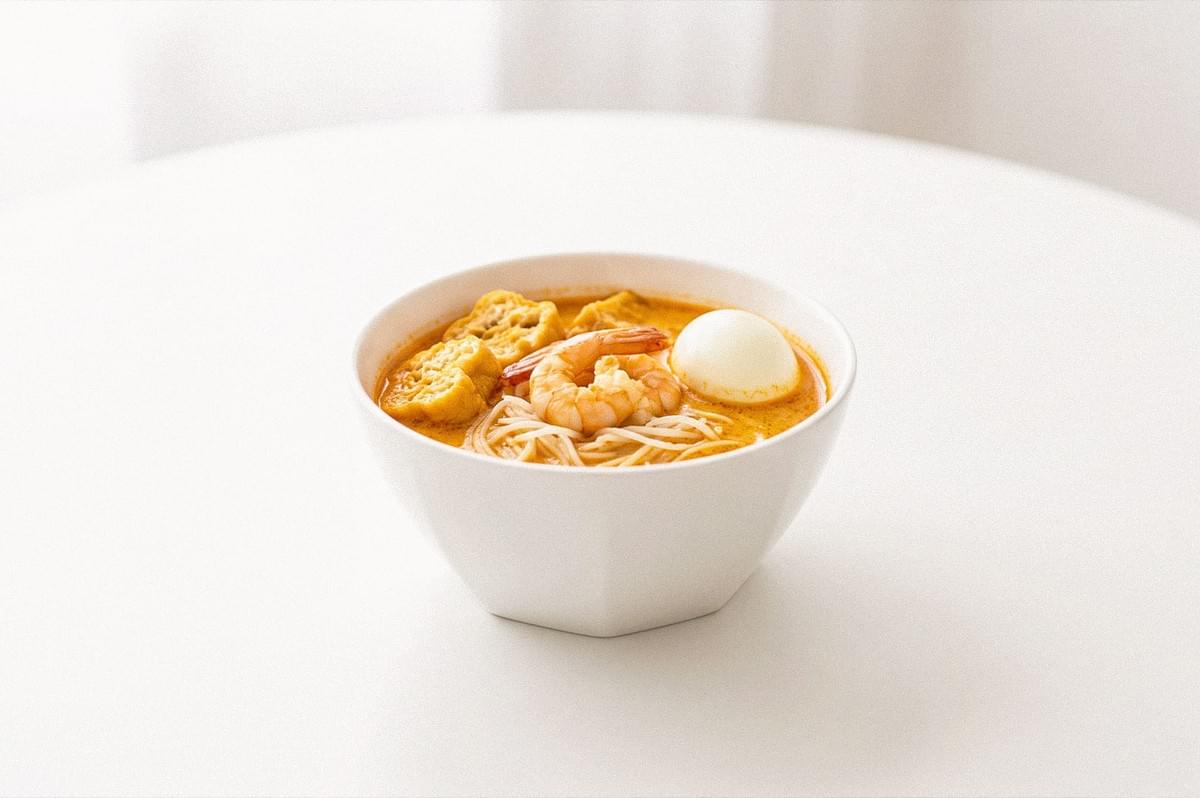
An AI image of an imaginary bowl of laksa for a mood board or a concept campaign is one thing. An AI image presented as the actual laksa a customer will receive is something else entirely. Keep those two worlds separate and you'll rarely go wrong.
How I Approach It
- Decide what must stay real. Before I open any AI tool, I write down the non-negotiables. The actual dish. The actual portion. The real ingredients. The restaurant's branding and plating. These are the things AI is not allowed to quietly change.
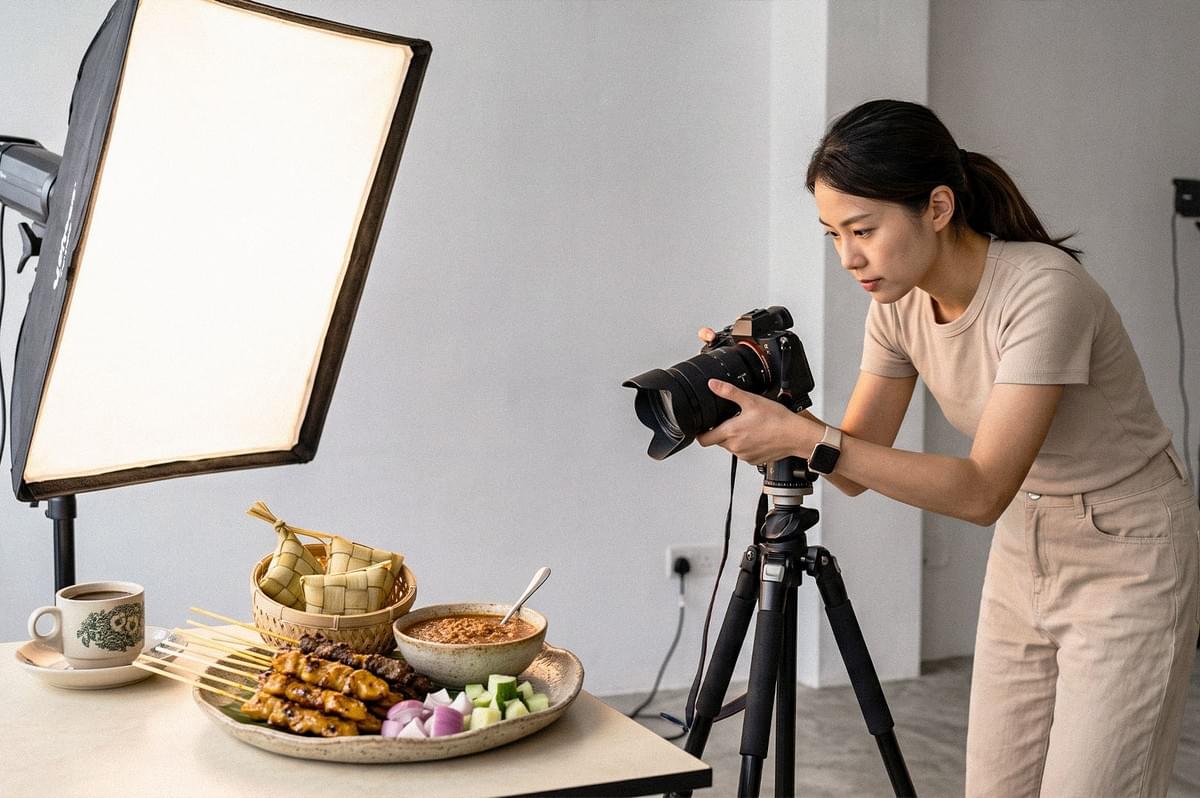
- Photograph the real food first. Even when AI will get involved later, I capture a strong base image. A 45-degree dining view, an overhead, a close-up of the texture. I keep the untouched original file. Always. It's my proof and my anchor.
- Identify what AI should change. AI is at its best working on everything around the food. Swapping a cluttered background for a dark wooden shophouse table. Extending a tabletop. Creating negative space for headline text. Removing a stray sauce bottle at the edge of the frame.
- Write specific prompts. Vague prompts give you generic food. Instead of "make this look professional," I write something like: "Keep the photographed bowl, noodles, ingredients, and portion completely unchanged. Replace only the background with a dark wooden Singaporean restaurant table, soft window light from the left, natural shadows, realistic perspective." The most important part of any prompt is telling it what not to touch.
- Generate several versions. I never grab the first, most dramatic result. I compare them for shadow direction, colour accuracy, perspective, and whether the food still holds together. AI images can look stunning at a glance and fall apart when you zoom in.
- Do a human quality check. This is where I slow down. I zoom in on the chopsticks, the prawns, the rice grains, the reflections, the logos. For local dishes especially, I ask one blunt question: does this still look like chicken rice, or like a generic "Asian food" the model invented? That difference matters enormously with dishes people know by heart.
- Keep a production record. For commercial work, I hold on to the original photo, the AI versions, the prompts, the tool used, and notes on what was generated. If a client or anyone else ever asks how the image was made, I can answer honestly and quickly.
Behind the Lens: For a better picture, I utilize the Best AI Tools for Food Photography in 2026 article.
The Honest Benefits
I don't want to sound like AI is all risk. It genuinely helps, and I'd be lying if I said otherwise.
Faster concept testing. Before committing to a full shoot, I can show a café owner four directions: a clean white studio, a dark luxury interior, a bright shophouse table, a tropical outdoor setting. These act as visual prototypes. We agree on a mood before anyone cooks a thing.
Easier resizing. One strong photograph can become an Instagram portrait, a square post, a website banner, and a menu graphic without reshooting every format. For a small business watching its budget, that flexibility is real money saved.
Creative room. AI lets me explore backgrounds and settings that would otherwise need props, set construction, and a day of post-production. The best use, I've found, isn't AI instead of photography. It's AI extending what a good photograph can already do.
For a small F&B business, that can mean testing a festive Mid-Autumn setting or a rainy-afternoon café mood without building any of it physically. That's a gift, used honestly.
The Risks I Watch For
Now the part I care about most.
Misrepresenting the food. This is the big one. Enlarging the chicken, adding prawns that weren't there, making a modest portion look generous. It's tempting, and it's exactly what got me into trouble with that nasi lemak. Customers form expectations from your photos. When the plate doesn't match, they feel it.
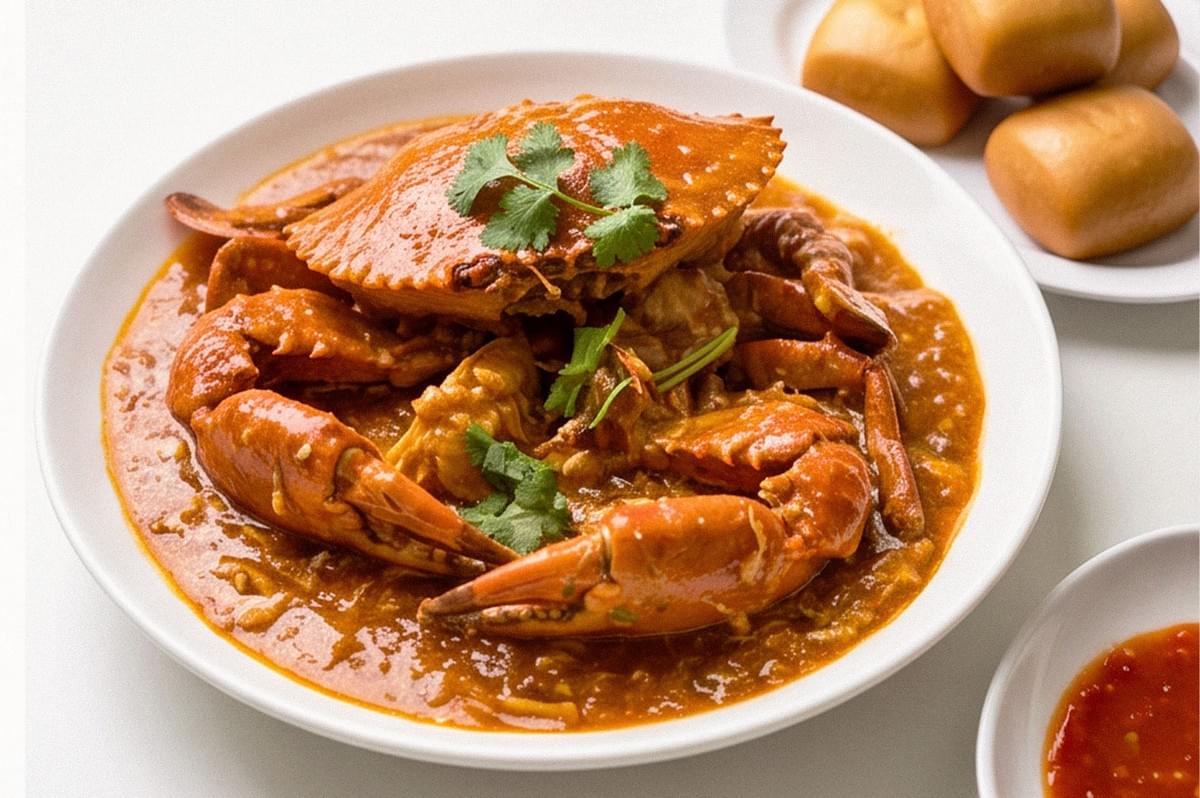
Cultural inaccuracy. Ask AI for a "traditional Singapore hawker breakfast" and it may cheerfully blend cues from three different cuisines into something that looks plausible but is nobody's actual breakfast. For dishes carrying real heritage, kaya toast, laksa, chilli crab, I lean on real references and actual food. The culture deserves that respect.
Over-polishing. AI food can become too perfect. Unnaturally glossy sauce. Symmetrical garnishes. Steam that defies physics. Plastic-looking rice. A dish doesn't get more appetising by becoming less real. Often the opposite.
Licensing. Don't assume every platform grants identical commercial rights. Before using an image commercially, check the commercial-use terms and whether any stock assets were folded in. It's dull to verify and painful to skip.
A Few Honest Questions
Do I need to label my images as AI-generated?
As of late 2025, there's no specific requirement to. But the honesty rules under the CPFTA and the advertising code still apply. I'd rather earn trust by being accurate than lean on a label.
Can AI replace my food photographer?
Not really, and I say that as someone who uses AI daily. It's excellent for backgrounds, concepts, and resizing. It's risky as the source of the actual food you're advertising. Real food plus an AI environment is a controlled workflow. Entirely invented food passed off as your dish is not.
What's the biggest beginner mistake?
Treating the first generation as the final image, and generating the food itself instead of photographing what you actually serve. Photograph the real thing. Let AI handle the world around it.
How much does this cost?
It depends entirely on the approach. DIY AI generation is mostly software credits and your own time, good for concepts and social content. A real shoot with AI backgrounds adds a photographer's fee. Premium commercial work brings in a stylist and retoucher. Don't compare only the software subscription against a photographer's rate. The real cost includes direction, styling, selection, retouching, and quality control.
The One Principle Worth Remembering
I still think about that customer at the café, holding a plate that didn't match my photo.
She wasn't angry. She was just a little disappointed, and that was worse. Because disappointment lingers. It quietly tells someone that the picture lied, even gently, even beautifully.
If you take nothing else from this, take this line. I keep it taped, figuratively, above every project:
Photograph what is factual. Generate what is creative.
Use the camera for the things that must be true. The actual food. The real portion. The genuine ingredients. Your packaging. Your restaurant space.
Use AI for the things that are creative. Concepts. Backgrounds. Mood. Negative space. Compositional experiments. Decorative elements that make no claim about the dish itself.
That single distinction preserves what makes AI wonderful, the speed, the flexibility, the room to play, without spending the one thing you can't regenerate: your customers' trust.
That's the whole craft, really. The rest is just light and patience.
