

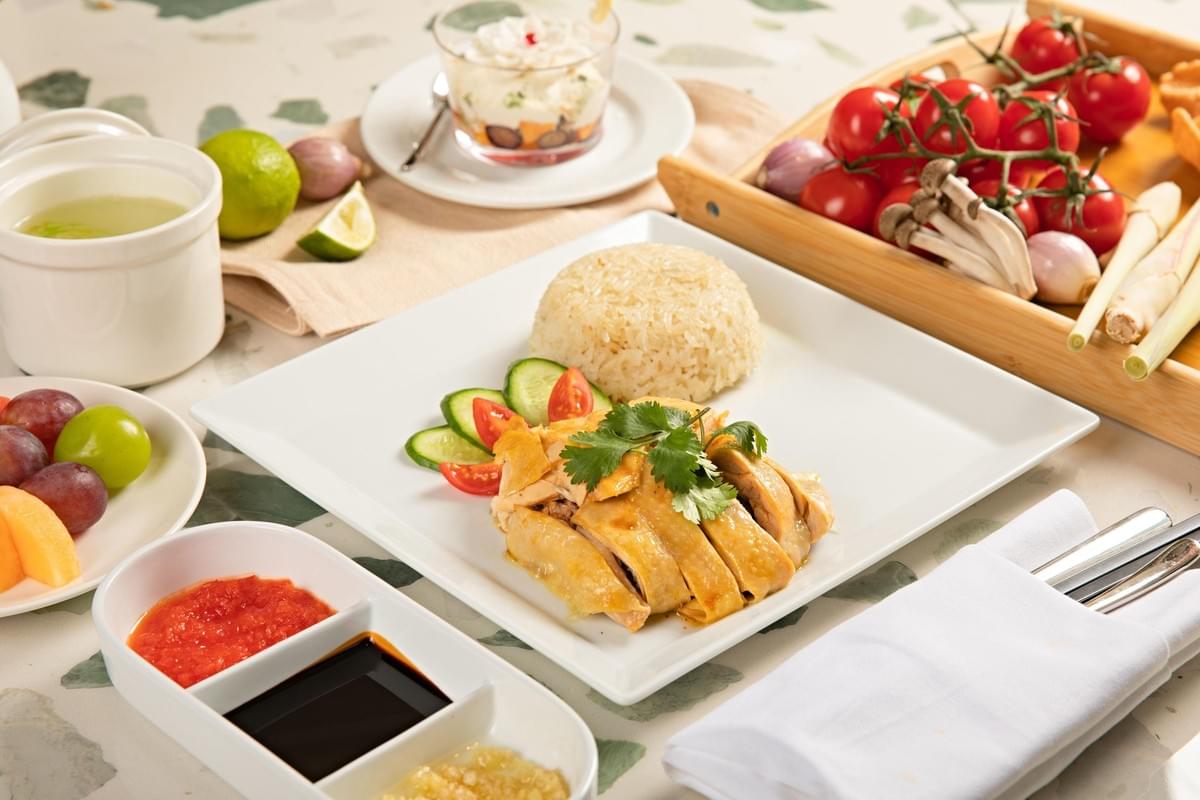
The first time I tried to generate a plate of chicken rice, I got back something that looked expensive and completely wrong.
I stared at it for a while, a little annoyed. I'd typed "Hainanese chicken rice, realistic food photography" and expected the machine to understand. But that's the thing about chicken rice. It looks simple, so we assume it's easy to describe. It isn't. It's one of the hardest dishes to get right, precisely because there's nowhere to hide.
If you're new to prompting local dishes, it's worth reading this guide on SG hawker culture first — it gives useful context before you begin.
Why Generic Prompts Fail This Dish
Chicken rice doesn't shout. It doesn't have the orange drama of laksa or the busy layers of nasi lemak. It's quiet. Pale chicken, off-white rice, a few sauces, a bowl of clear soup. That quietness is exactly why AI struggles with it.
When you give a model very little, it fills the gaps with whatever it thinks "chicken and rice" means. Usually that's a Western or generic Asian default: roasted breast meat, jasmine rice, decorative herbs, a fancy plate. The dish drifts away from Singapore without you noticing until it's done.
In my experience, the fix isn't more adjectives. It's more accuracy. You have to describe the visual grammar that makes a Singaporean glance at the plate and think, yes, that's it.
What Makes Chicken Rice Visually Singaporean
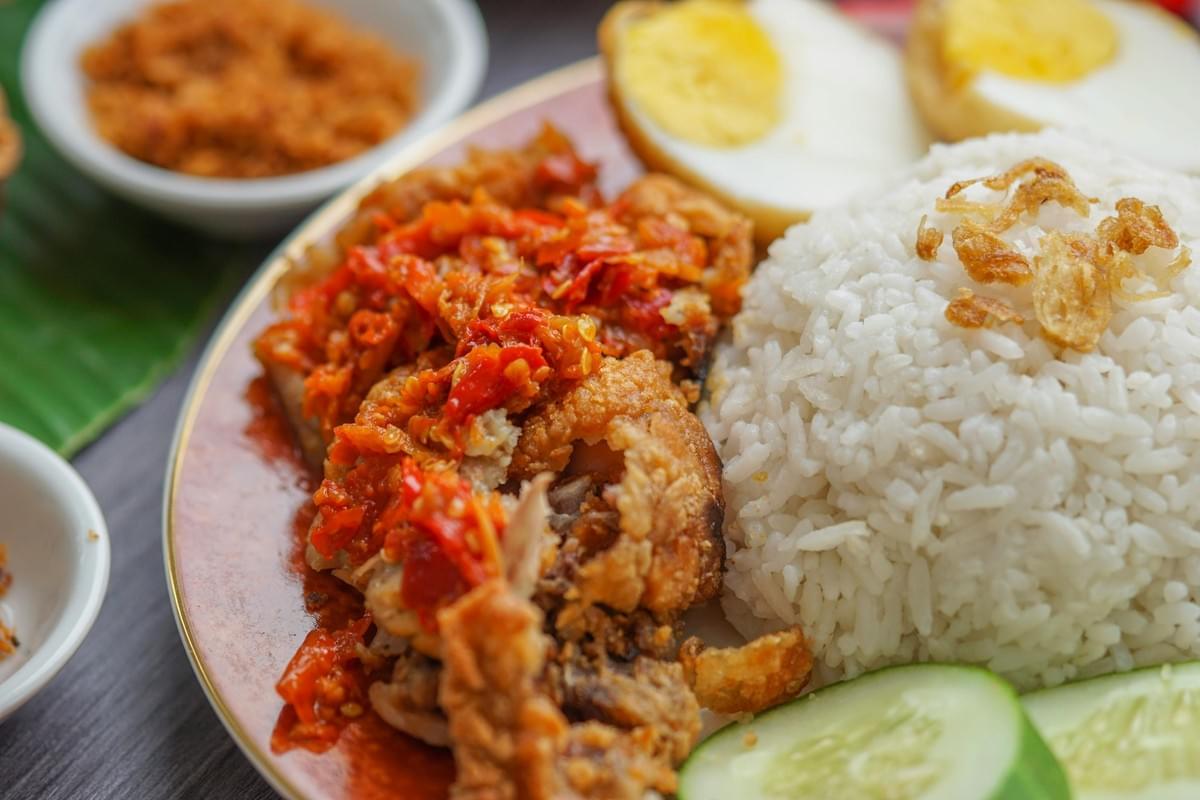
Before you write a single word, it helps to know what you're actually looking at. The identity of the dish lives in small, specific details:
- Poached chicken, pale and tender, with silky glossy skin — not grilled, not browned
- Fragrant oily rice cooked in chicken stock, faintly glossy, grains that hold their shape — not plain steamed rice
- The sauce set: bright red chili sauce, thick dark soy, pale ginger paste
- A small bowl of clear soup on the side
- Cucumber slices, thin and pale green
- A plain white plate, often melamine, on a practical hawker table
Miss the sauces, and the plate looks unfinished. Make the rice plain white, and it reads as generic. The soup bowl and cucumber are not extras — they're part of how the dish is served, and their absence is felt.
There's also the roasted version, which is a different animal entirely. Golden-brown lacquered skin, chopped rather than sliced. If you want that, you have to say so. Prompting only "chicken rice" leaves the door wide open for the model to invent.
The Step Workflow
Here's the process I follow now, every time. It keeps me from falling back into lazy, vague prompts.
- Observe the Real Dish
Go eat a plate. I'm serious. Sit at a hawker centre — somewhere like Maxwell Food Centre or Tanjong Pagar Plaza — order chicken rice, and look at it before you eat.
Notice the details: Is the chicken poached or roasted? Sliced or chopped? Is the skin glossy? How is the rice plated? Where do the sauces sit — on the plate or in little saucers? What kind of plate is it? Is the table plastic, marble, or metal? Is the light overhead and fluorescent, or soft daylight near the open edge?
You're not just taking a photo. You're collecting information.
Pro tip: Take three quick reference shots — one at 45 degrees, one from overhead, and one close-up of the chicken skin and rice. Then put your phone down and eat while it's hot. The photos are for later. The meal is for now.
2: Decide the Image Style
Pick your lane before you prompt. I work in three:
Documentary hawker — for local authenticity. Cues: white melamine plate, plastic tray, natural overhead fluorescent lighting, softly blurred stalls behind.
Clean editorial — for blog headers and article visuals. Cues: soft side light, neutral background, minimal props, realistic texture.
Menu-ready commercial — for mockups and delivery-style images. Cues: appetizing chicken skin, glossy rice, sauces clearly visible, shallow depth of field.
Deciding this upfront saves a lot of frustrating regeneration.
- Build the Prompt in Layers
I structure prompts like this:
Dish + version + ingredients + texture + serving ware + setting + lighting + camera angle + exclusions.
It reads long, but each layer does a job. Here's a full example:
"Singapore Hainanese chicken rice, poached white chicken slices with silky glossy skin, fragrant oily rice cooked in chicken stock, cucumber slices, red chili sauce, dark soy sauce, pale ginger paste, small bowl of clear chicken soup, served on a plain white melamine plate on a hawker centre table, clean realistic food photography, soft natural daylight, 45-degree angle, no fine-dining plating, no parsley, no salad garnish."
- Add Visual Hierarchy
Chicken rice can look flat when every element competes for attention. Tell the model what matters most.
Try: "The chicken slices are the main subject, rice behind them, sauces arranged clearly on the side, soup softly blurred in the background."
This helps prevent the food items from fusing into one blurry mass, which happens more than you'd expect with plates that have many small components.
- Add Negative Prompts
This is where you close the door on wrong outputs. For chicken rice, I lean on:
"No grilled chicken breast, no Western salad, no parsley, no lemon wedge, no sushi rice, no fine-dining plating, no black slate plate, no luxury restaurant background, no plastic-looking chicken skin."
Weak vs Strong Prompts
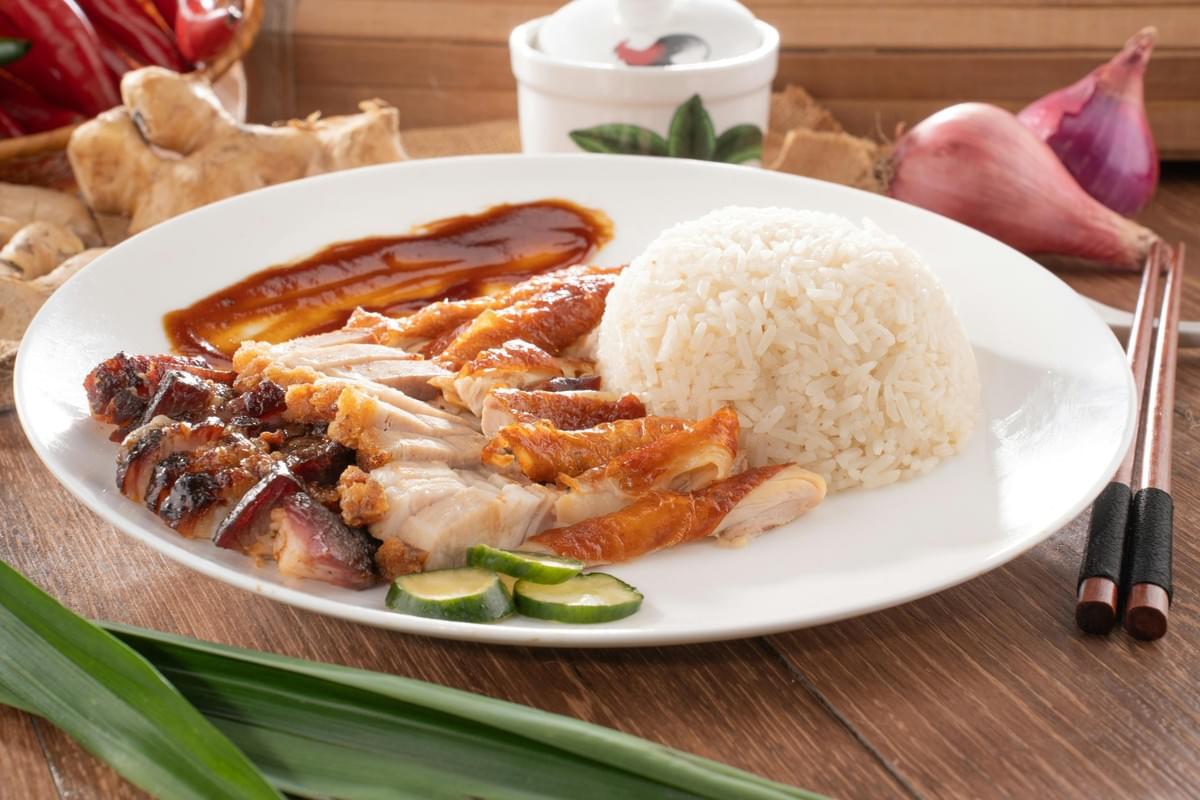
The difference is easier to feel than explain, so here it is side by side.
Weak: "Chicken rice food photography."
Strong: "Singapore Hainanese chicken rice, poached white chicken slices with silky glossy skin, fragrant oily rice cooked in chicken stock, cucumber slices, red chili sauce, dark soy sauce and pale ginger paste on the side, small bowl of clear chicken soup, plain white melamine plate, clean hawker centre table, realistic familiar food photography, soft daylight, 45-degree angle, no fine-dining plating."
And when the result comes back too fancy — slate plate, microgreens, dramatic shadows — don't just add more. Remove the wrong language: "plain white plate, simple cucumber slices, clear soup bowl, clean kopitiam table, natural overhead lighting, no microgreens, no luxury plating, no black slate plate."
Insider knowledge: Fixing a bad image is usually about subtraction, not addition. The model isn't missing detail — it's carrying the wrong visual assumptions. Strip those out first.
Ready-to-Use Templates
Hawker-style:
"Singapore Hainanese chicken rice, poached white chicken slices with silky glossy skin, fragrant oily rice cooked in chicken stock, cucumber slices, red chili sauce, dark soy sauce, pale ginger paste, small bowl of clear chicken soup, plain white melamine plate, clean hawker centre table, soft daylight, 45-degree angle, no fine-dining plating, no parsley."
Editorial header:
"Clean editorial photograph of Singapore chicken rice, tender poached chicken with glossy skin over fragrant oily rice, cucumber slices, chili sauce and dark soy on the side, clear soup bowl softly blurred in the background, neutral tabletop, soft side light, minimal familiar styling, no luxury plating."
Roasted version:
"Singapore roasted chicken rice, chopped roasted chicken with golden-brown glossy skin, fragrant oily rice, cucumber slices, red chili sauce, dark soy sauce, clear soup bowl, white hawker plate, clean kopitiam table, natural light, no Western garnish."
Documentary scene:
"Authentic Singapore hawker centre lunch, plate of Hainanese chicken rice on a plastic tray, poached chicken slices, oily rice, cucumber, chili sauce, dark soy, clear soup bowl, metal spoon and fork, kopitiam table, softly blurred hawker stalls in background, practical fluorescent lighting, documentary food photography."
A Note on Cost and Etiquette
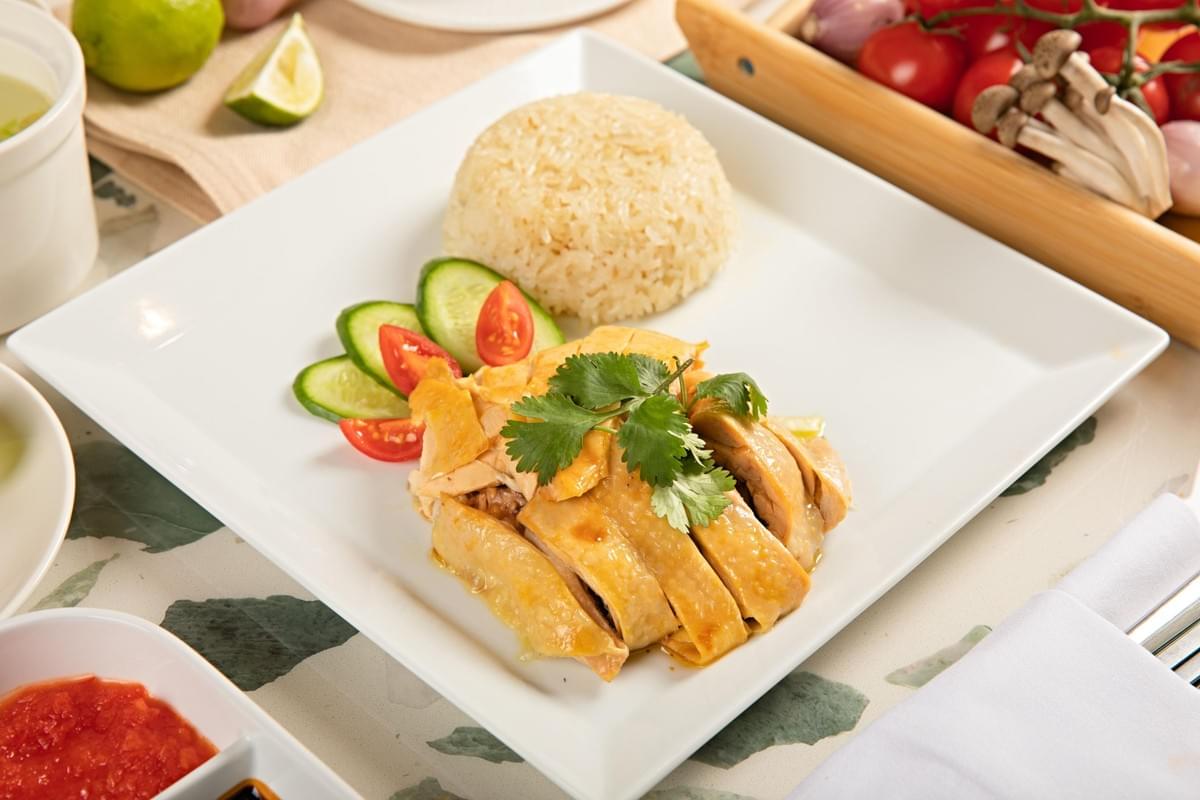
Building good references is cheap. A hawker plate runs about S$4–S$8, a kopi or iced drink S$1.50–S$4. A café version will cost you S$10–S$25 or more, and honestly, for reference purposes the hawker plate teaches you more.
The etiquette matters more than the money, though. Queue properly, decide your order before you reach the front, and don't block the collection counter for a shot. Take your photos at your table, not while holding up the stall. During busy hours, share tables — don't hog one just to stage a photo. And return your tray when you're done. This is expected here, and it keeps the space right for everyone.
One more thing worth taking seriously: chicken rice can be halal or non-halal depending on how it's prepared and certified. Don't label an image or a stall halal unless you actually know. It's a real trust marker in Singapore, not a decorative word.
Getting Better Results: Common Questions
How do I make AI chicken rice look like Singapore chicken rice?
Name the dish precisely, specify poached or roasted chicken, describe the oily rice, include the sauce set and soup, and set it on a plain plate in a hawker context. Then check it against your own memory of the dish.
Why does AI keep making it look too fancy?
Most generators default to restaurant polish. Push back with "hawker-style presentation, plain white plate, natural portion size, no fine-dining plating."
Can I take reference photos at a hawker centre?
Yes, but quickly and quietly. Don't block queues or stage a photoshoot during peak lunch, and return your tray after.
Do I need a proper camera?
No. A phone is plenty. You're collecting information — sauce placement, rice texture, chicken colour, plate type — more than a finished image.
The Difference Is in the Details
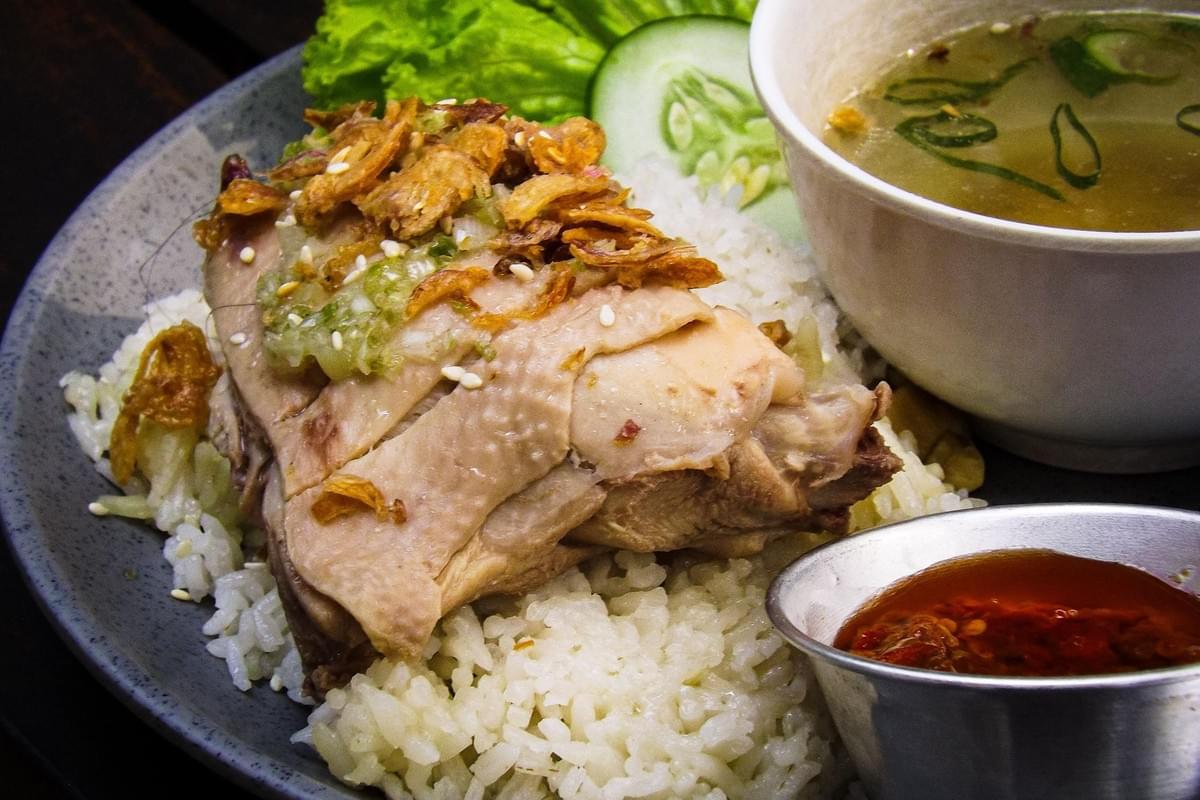
Chicken rice taught me the quiet lesson at the heart of AI food photography: realism isn't about drama. It's about familiarity.
The image works when someone from here glances at it and recognizes it instantly — the gloss of the skin, the warmth of the rice, the red of the chili, the cucumber at the edge, the soup bowl nearby, the plain plate under practical light.
So start with one plate you know by heart. Go eat it, look closely, then build your prompt in layers. You'll get it wrong a few times. I still do. But each plate that finally looks right teaches you something the machine can't — how the food is actually served, and why that matters.
Trust your own eyes over any tool. They already know what chicken rice should look like.
