

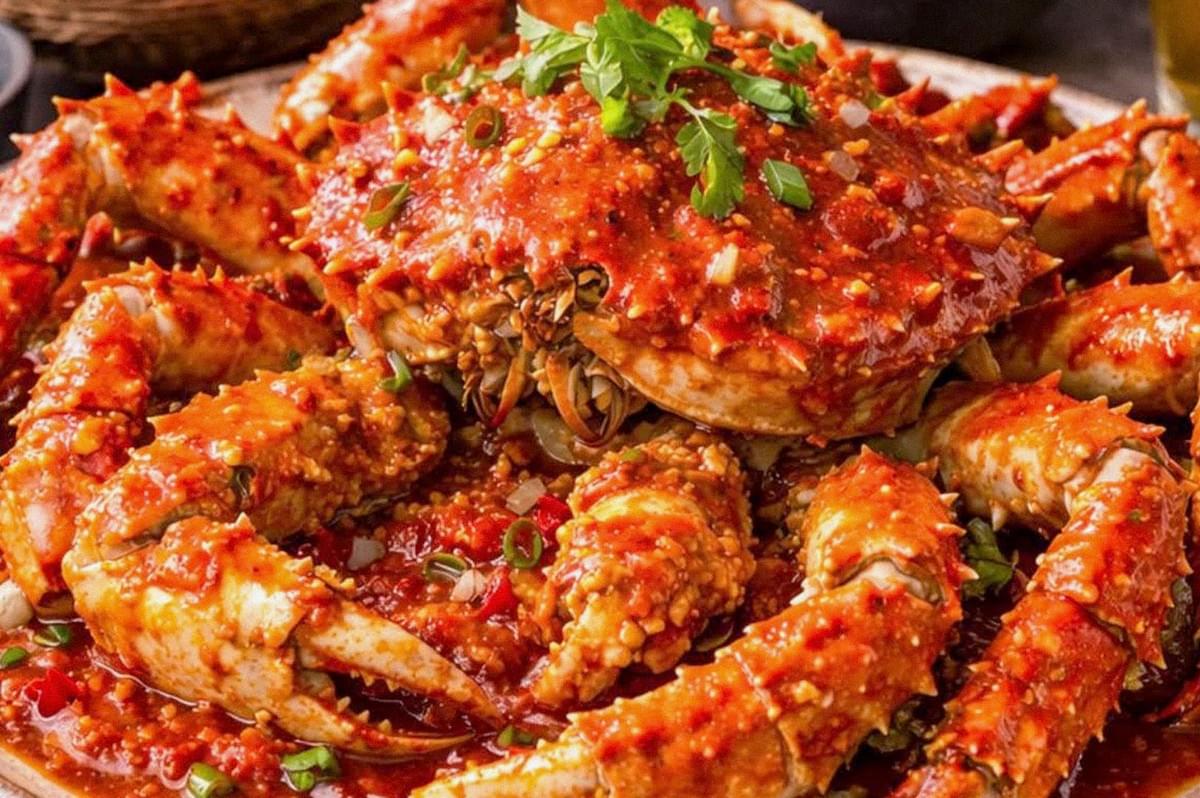
The first time I ruined a good photo of chilli crab, it was already too late to fix.
I'd filled the entire frame with the crab. Every corner. It looked wonderful on my phone that evening. Then I tried to crop it into a vertical shape for a Story, and there was nowhere to go. No breathing room. The claw ran straight off the edge, the sauce got cut in half, and the whole thing felt cramped and wrong.
That plate deserved better. The stall had spent years getting that gravy right, and I'd trapped it in one shape that only worked in one place.
I've learned since then that the format matters just as much as the food. Not because the food owes anything to a platform, but because the platform decides whether anyone ever pauses long enough to see it. If you're curious how different platforms stack up, we've written about Comparing Today's Most Popular AI Food Photography Platforms elsewhere — worth a read before you go further. For now, let me walk you through what actually works for social media.
Why the Format Matters Before You Shoot
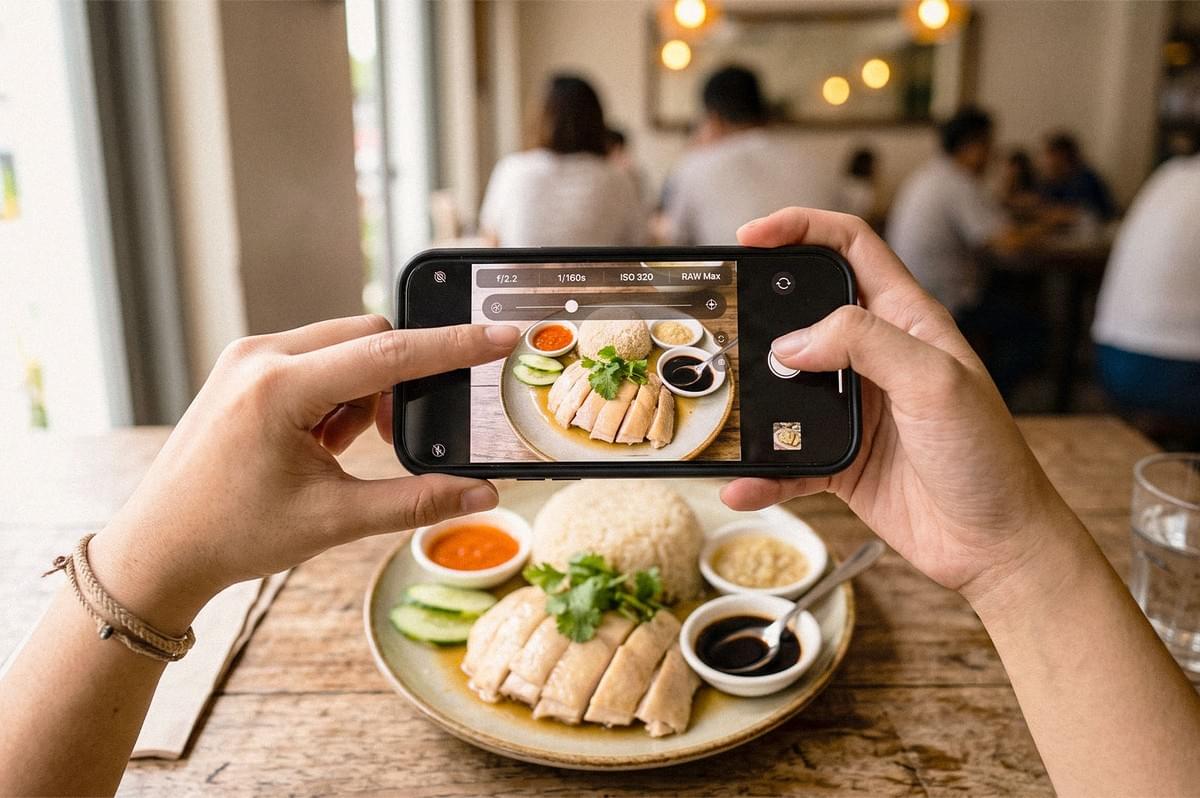
Here's the mistake I made for years: take a beautiful photo, then post it everywhere and hope for the best.
The better way is quieter and more deliberate. Decide where the photo will live before you press the shutter. Instagram, TikTok, and Pinterest each ask a different question of your image, and if you don't answer that question at the point of shooting, you're left cropping your way out of a corner later.
This matters here more than most places. In Singapore, social media has become a real doorway to food discovery. CNA reported that 52% of surveyed Singaporeans found restaurants through the restaurants' own social profiles, and 43% through influencers. A photo isn't just a memory anymore. It's often the first handshake between a stall and a stranger.
Pro tip: Before you shoot, ask one question — "What do I want someone to do after they see this?" Order? Keep watching? Save it for later? The answer decides the shape.
Instagram: The 4:5 Portrait for the Hero Dish
For a feed post, I almost always start with a 4:5 portrait.
It gives the dish more vertical room on the screen than a square, without feeling stretched. A plate of nasi lemak sits comfortably in it. A tall stack of kaya toast has space to breathe. A cocktail keeps its height.
Instagram supports a range of ratios, so it's worth checking the current in-app crop rather than assuming every image must be 4:5. But as a starting point, portrait is the safest home for a proper hero shot.
Angle matters as much as ratio. I've found three worth knowing:
- 45 degrees — the way you actually see food when you sit down to eat. Good for most bowls and plates.
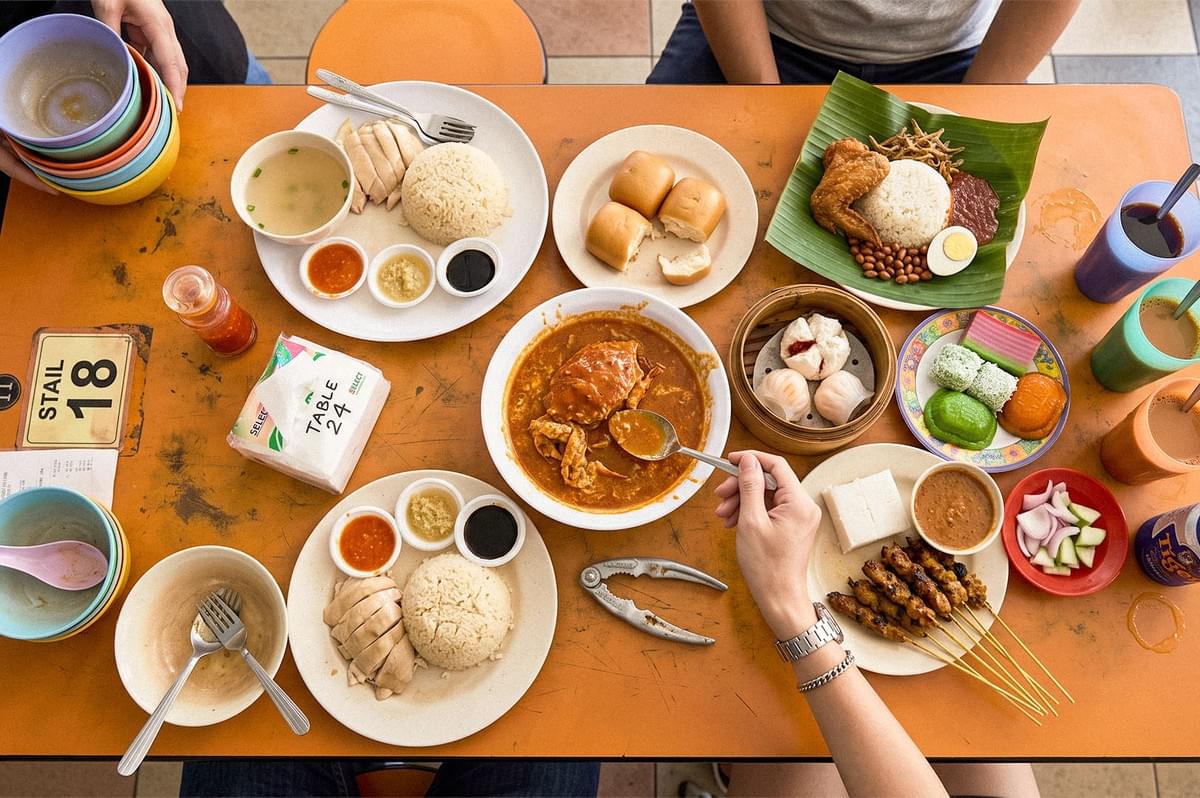
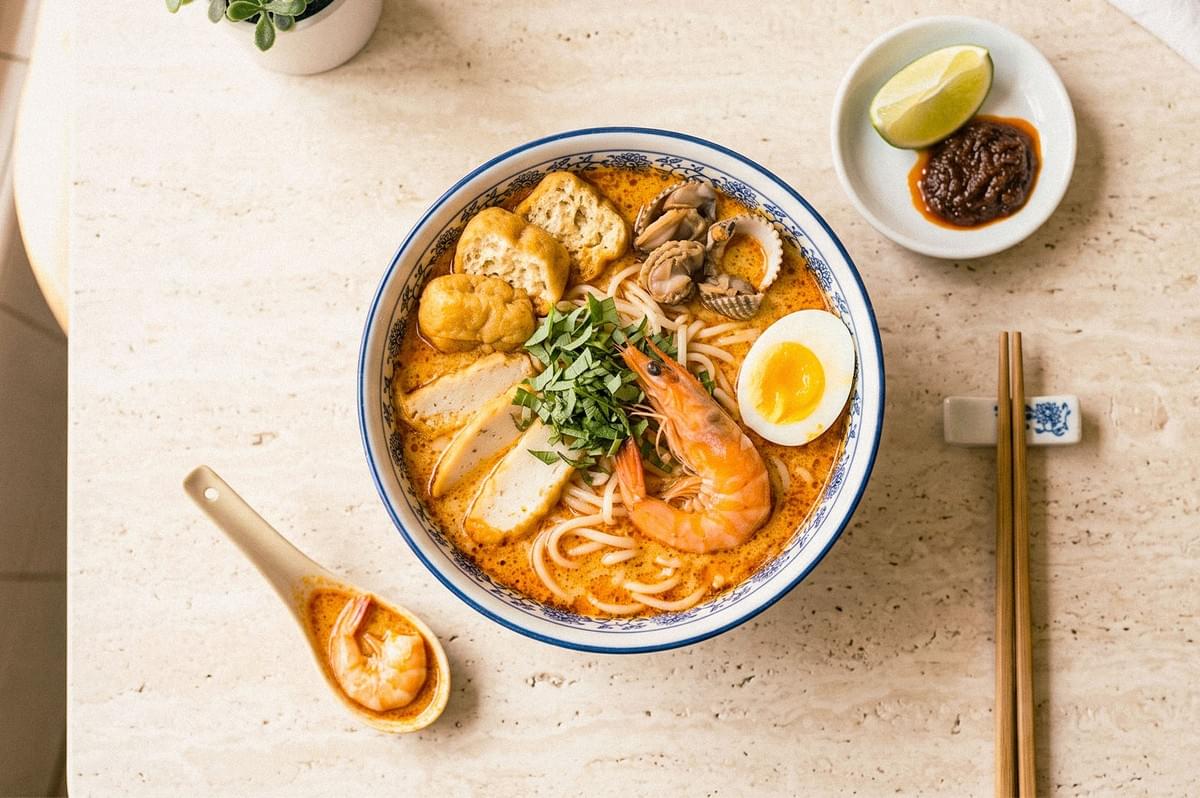
- Overhead — best for noodle dishes, spreads, and multi-dish tables where the arrangement is the story.
- Eye-level — for burgers, layered cakes, anything with height worth showing.
Don't assume overhead is automatically more appealing. The best angle is simply the one that explains the food. For nasi lemak, overhead shows the sambal, ikan bilis, egg, and rice all at once. That clarity is the point.
TikTok: 9:16 Vertical, Built for Movement
TikTok is where I see the most wasted effort. People take an Instagram photo, drop it into a TikTok post, and wonder why it falls flat.
The platform asks a different question. Instagram asks, "Does this look good?" TikTok asks, "What happens next?"
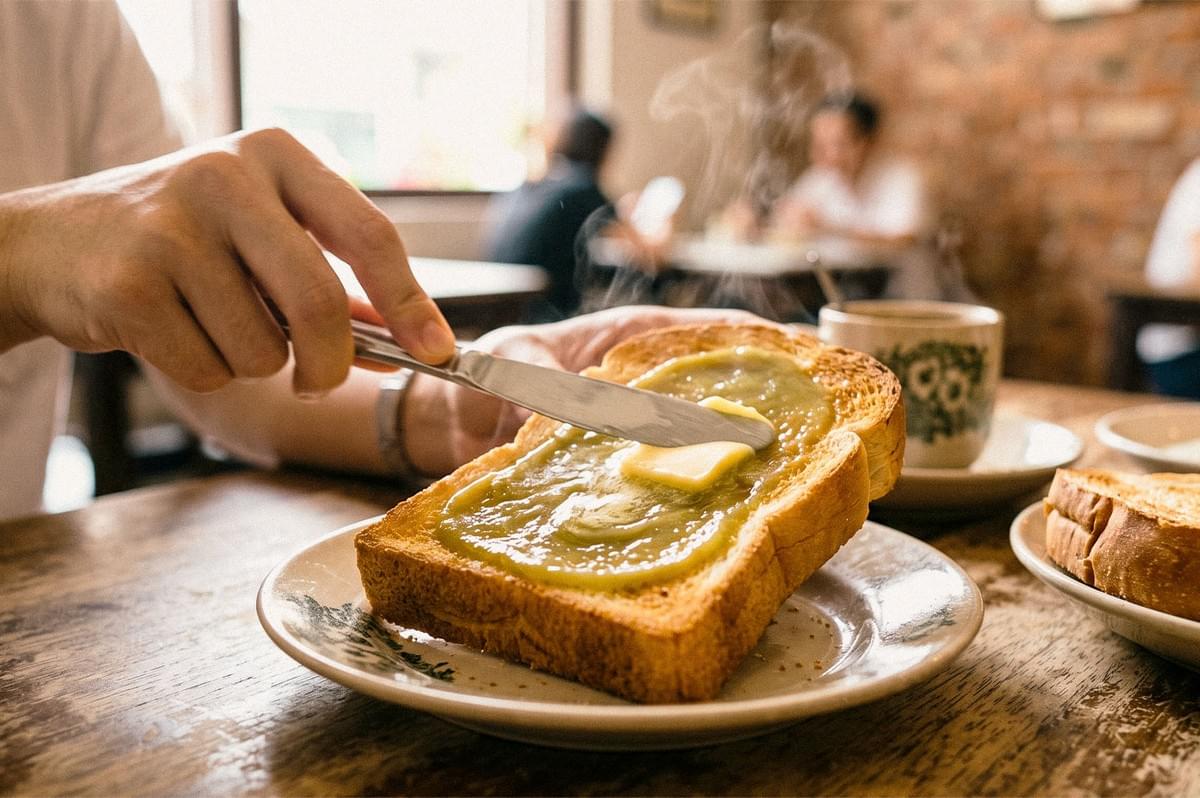
That means movement wins. Noodles being lifted. Laksa being poured. Satay coming off the charcoal. Kaya toast being buttered while it's still warm. The transformation is the hook, not the perfect still.
Shoot it full-screen at 9:16. And keep your important details — the dish name, any text — away from the extreme top and bottom of the frame. TikTok's interface covers those edges, and I've lost a caption there more than once.
Insider knowledge: If you only have stills, a photo slideshow can still work as a mini review — exterior, interior, the signature dish, a close-up, the bill, the verdict. It gives people a story to move through, which is what the platform rewards.
Pinterest: 2:3 for Saving, Not Scrolling
Pinterest has a different mindset entirely, and it took me a while to understand it.
People here aren't asking "Where do I eat tonight?" They're thinking, "I want to remember this." They save. They come back weeks later, planning a trip or a weekend.
That makes Pinterest useful for guides, itineraries, and "what to eat" pieces rather than one-off pretty plates. Pinterest recommends a 2:3 vertical, around 1000 × 1500px, and warns that taller ratios can get cropped.
So instead of just posting a photo of laksa, I'd build it into something like "Five Singapore Dishes to Try on Your First Visit," with the laksa as the central image and a little space for text. The photo becomes useful, not just lovely — and useful is what gets saved.
Shoot Wider Than the Final Crop
If you take one habit from this piece, take this one.
Don't fill the frame. Leave room around the dish. That breathing space is what lets a single photograph become an Instagram portrait, a Pinterest vertical, a TikTok crop, a website banner, and a delivery thumbnail — all from one shot.
Think of that chilli crab I mentioned. Photograph it wide, and you keep the crab, the sauce, the bun, and a little of the table. Then you crop the crab as a hero for Instagram, add the restaurant setting and text for Pinterest, and pull a tight vertical of hands cracking the claw for TikTok.
One dish. Several homes. No re-shoot.
The One-Dish, Five-Asset Workflow
Here's exactly how I'd shoot that chilli crab in one sitting:
- Instagram hero (4:5). Crab slightly off-center, clean background, sauce catching the light.
- Instagram detail. A close-up of the claw, the sauce, and the mantou bun.
- TikTok vertical (9:16). Hands cracking the claw, sauce on the fingers, the mess of it.
- Pinterest (2:3). The crab with the restaurant setting behind it and negative space for a headline.
- Editorial wide shot. A horizontal frame of the whole table, for a website or article.
That's five usable assets from one plate. It's far kinder to your time and to the food, which waits for no one.
Lighting: A Window and a White Card
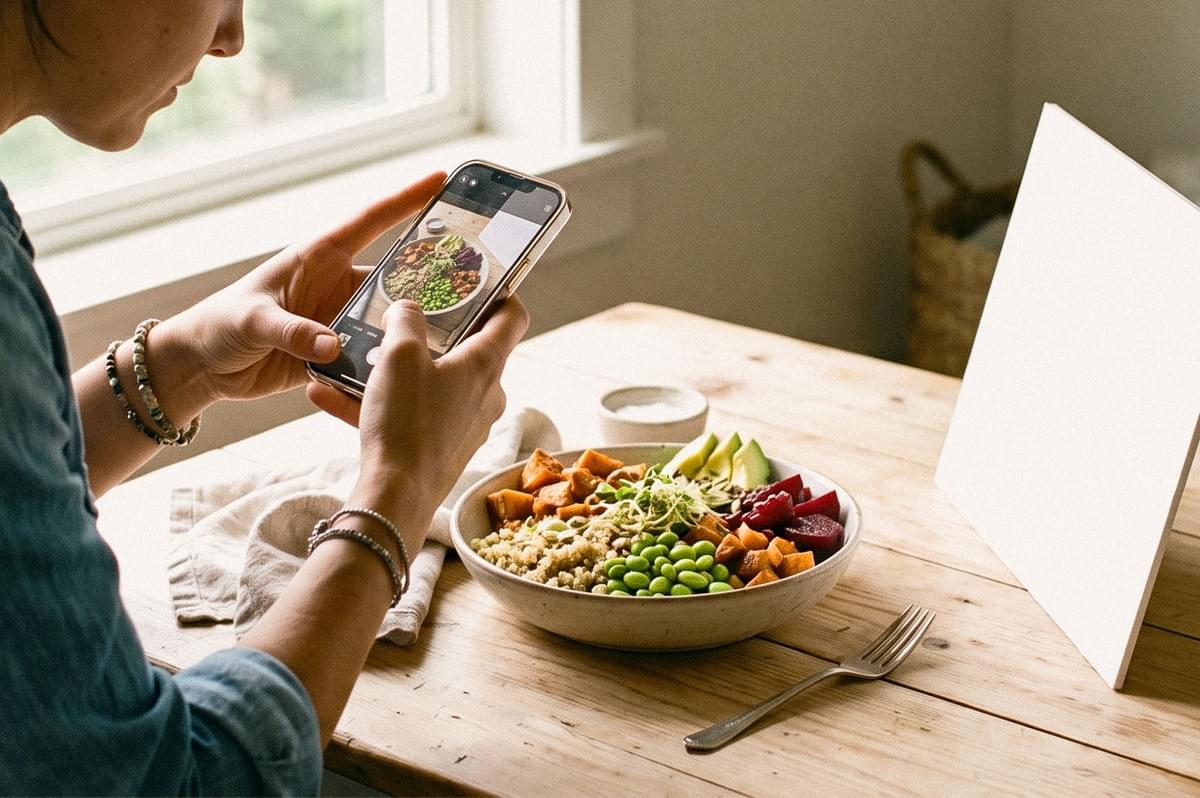
You don't need expensive gear. A phone beside a good window will outperform a fancy camera under bad restaurant lighting almost every time.
Restaurant lighting is designed for diners, not cameras. Mixed color temperatures, harsh overhead downlights, reflections off steel, all of it can flatten a dish that tasted alive.
So find soft, directional light. Position the dish like this: window, then dish, then a small white card on the far side. The window lights one side; the card bounces gentle light back into the shadows. Suddenly you can see the noodle texture, the crispy edges, the sauce, the meat fibers, without blasting everything bright and false.
Pro tip: Clean your phone lens first. It sounds trivial, but fingerprints build up fast in a restaurant, and a smudged lens quietly softens every photo you take.
Shooting in Hawker Centres
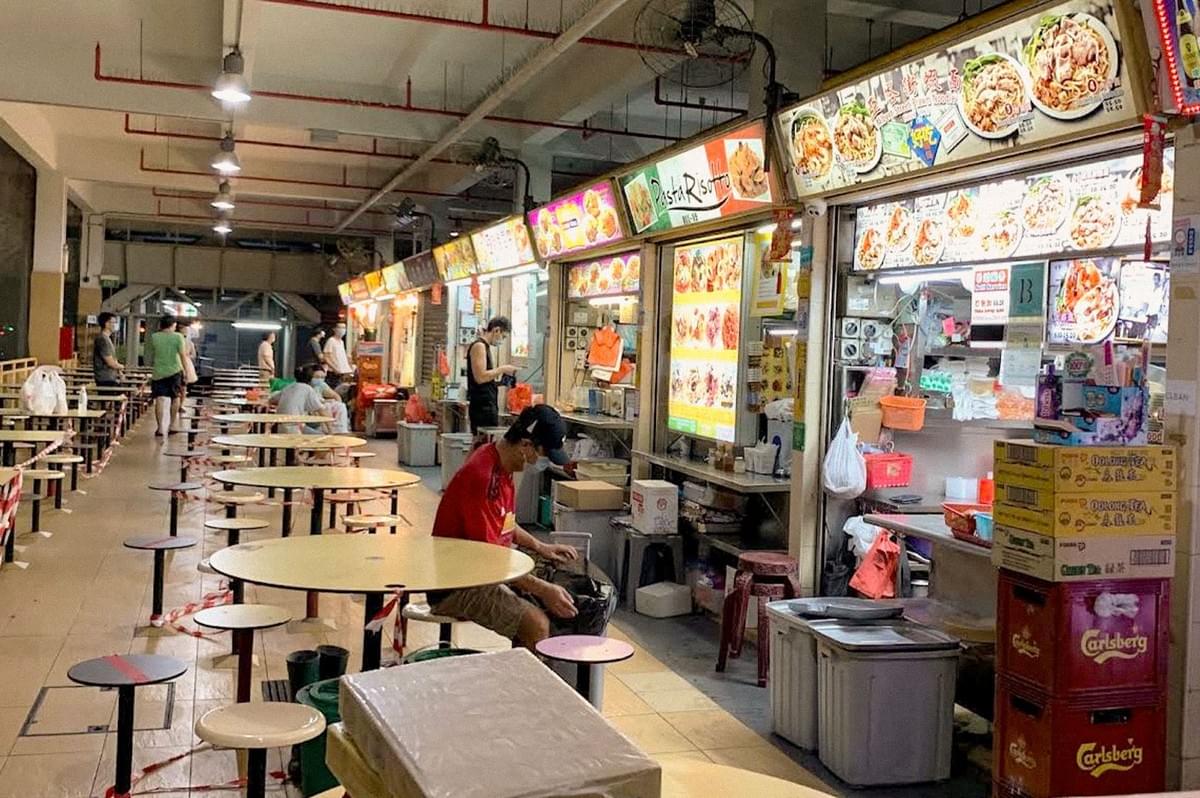
A hawker centre is not a studio, and I don't think it should pretend to be one.
You'll meet cramped tables, fluorescent light, steam, crowds, reflective metal, and a queue behind you. Fighting all that to fake a fine-dining look usually backfires. The food looks staged, and it loses the very thing that made it worth photographing.
I prefer a more documentary approach here. Show the chicken rice, yes, but let the stall signage or the kopitiam table into the frame. Capture the laksa with the busy stall behind it. Pair the satay close-up with the charcoal grill. The setting is part of the story, not a distraction from it.
And be considerate. Don't block queues, stand on chairs, hog tables, or move anyone's belongings. Clear your tray when you're done, the way we all should. A photo is never worth making the meal worse for everyone around you.
Common Mistakes to Avoid
I've made most of these myself:
- Over-editing. Pushing saturation until the chilli glows and the greens turn neon makes food look fake. I keep saturation adjustments modest, around 5 to 10%. The food already has its color.
- Digital zoom. Don't. Move your feet instead. Zoom smears the texture you're trying to show.
- Ultra-wide lenses. That 0.5x setting stretches bowls and plates near the edges. Stick to 1x for most food.
- Cropping too tight in-camera. The mistake I opened with. Leave room, always.
- Excessive blur. A soft background should separate the dish from its surroundings, not erase half the plate.
FAQ
Do I really need a different photo for every platform?
Ideally yes, but not three separate shoots. Plan the composition once, shoot wider than you need, and crop for each platform afterward. One good session can feed all three.
Why does my food look flat even when the restaurant looks nice?
Because that lighting was built for atmosphere, not cameras. Move toward a window, or bounce light back with a white card. It changes everything.
Should I shoot everything vertically?
For a social-first shoot, vertical is the safest starting point. Just don't frame so tightly that you can't crop it later.
One Last Thing
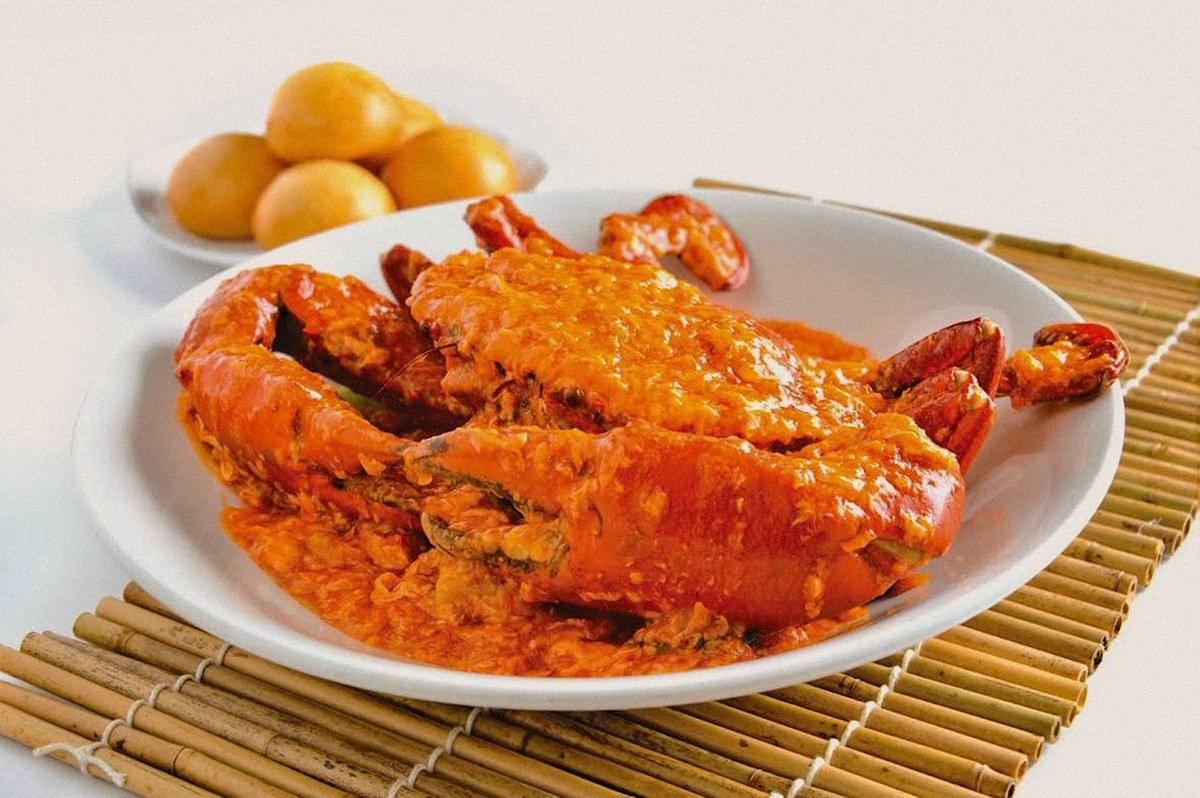
That first cramped chilli crab still bothers me a little. The food was honest. My framing wasn't ready for it.
What I've come to believe is simple. The format isn't about chasing platforms. It's about giving good food a fair chance to be seen — in a shape that fits where people are actually looking.
So decide the destination first. Shoot a touch wider than you think you need. Find a window. Respect the table you're sitting at and the people around it.
Instagram rewards the beautiful plate. TikTok rewards the moment around it. Pinterest rewards the idea behind it. Get those right, and one honest dish can quietly reach a lot of people who'll be glad you paused long enough to share it.
